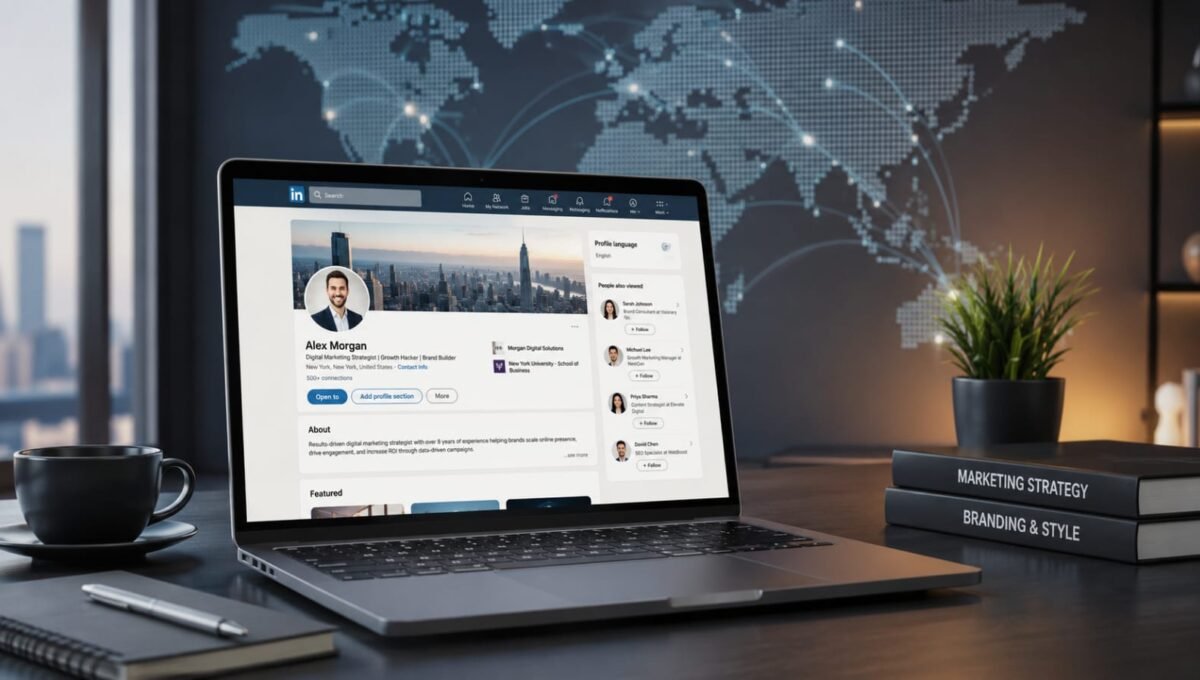
Quick Answer: Building Brand on LinkedIn for Global Clients
means positioning yourself as a trusted expert that companies in the US, UK, and EU hire directly, instead of competing only for local jobs. It combines a globally optimized profile, visible authority signals, consistent content, and confident outreach.
Relying only on local jobs limits how much you can earn and who you can work with. Many skilled freelancers and consultants stay stuck because they never present themselves to the world beyond their own city.
Building a Personal Brand on LinkedIn changes this completely. It shifts you from being just another “job seeker” applying quietly to becoming a recognized “global authority” that clients search for and contact first.
This guide is built for freelancers, consultants, and experts who want high ticket international projects. If you are ready to work with clients in the US, UK, or Europe, Building a Personal Brand on LinkedIn is the exact bridge you need to get there.
The Global Opportunity: Why LinkedIn Personal Branding Is Your Bridge
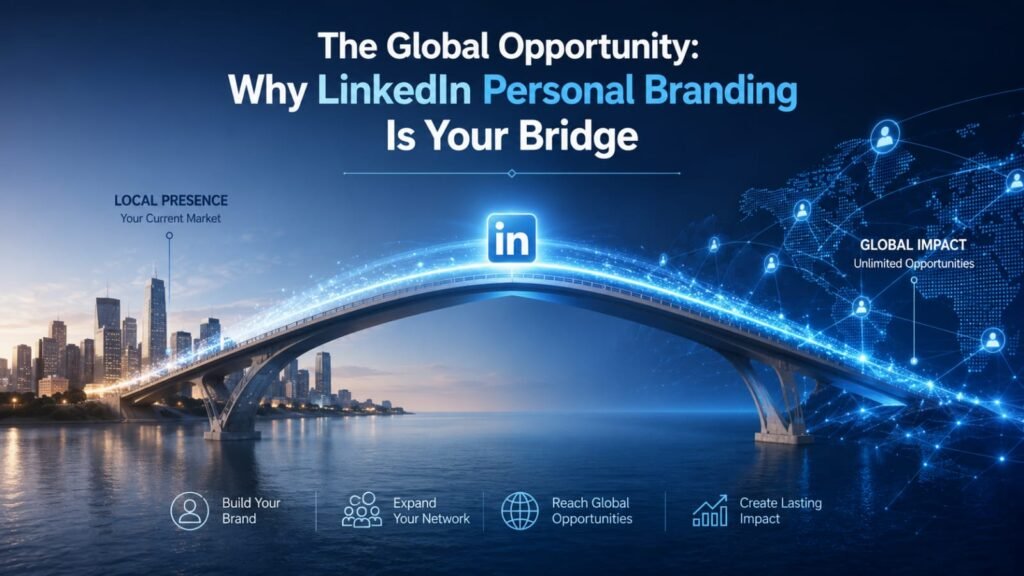
LinkedIn personal branding is the practice of using your profile, posts, and comments as proof of skill and reliability, replacing the in person meeting a global client can never have with you before hiring.
This is exactly why Building a Personal Brand on LinkedIn matters so much. LinkedIn usage continues to grow fastest in the US, UK, and across the EU, where decision makers actively use the platform to find talent instead of only posting job ads.
When you consistently show expertise on LinkedIn, you are no longer “a stranger from another country.” You become a known name that international clients feel comfortable trusting with real projects.
Step 1: Optimizing Your Profile for a Global Audience
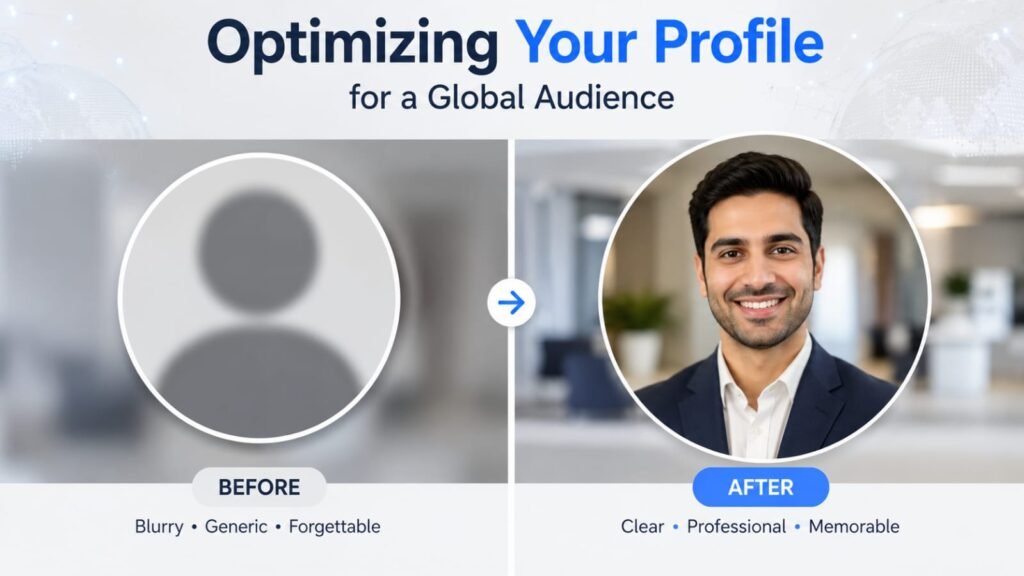
Global profile optimization is the process of rewriting your headline, About section, photo, and banner so a visitor from any country instantly understands your value, without needing extra context or a call to explain it.
Generic profiles fail with global clients because they feel local, vague, or unclear about who exactly you help. The table below shows the difference between a local only profile and one built for Building a Personal Brand on LinkedIn at a global level.
| Profile Element | Local Only Approach | Global Ready Approach |
| Headline | Job title only, e.g. ‘Accountant’ | Value driven, e.g. ‘Helping UK Retailers Cut Tax Costs’ |
| About Section | General career summary | Addresses timezone, English fluency, tools used |
| Photo/Banner | Casual or unclear setting | Neutral, professional, culture safe styling |
| Recommendations | Local colleagues only | Mix of local and international client praise |
| Content Focus | Personal updates or local news | Case studies in USD/EUR, global trend commentary |
The Professional Headshot & Banner
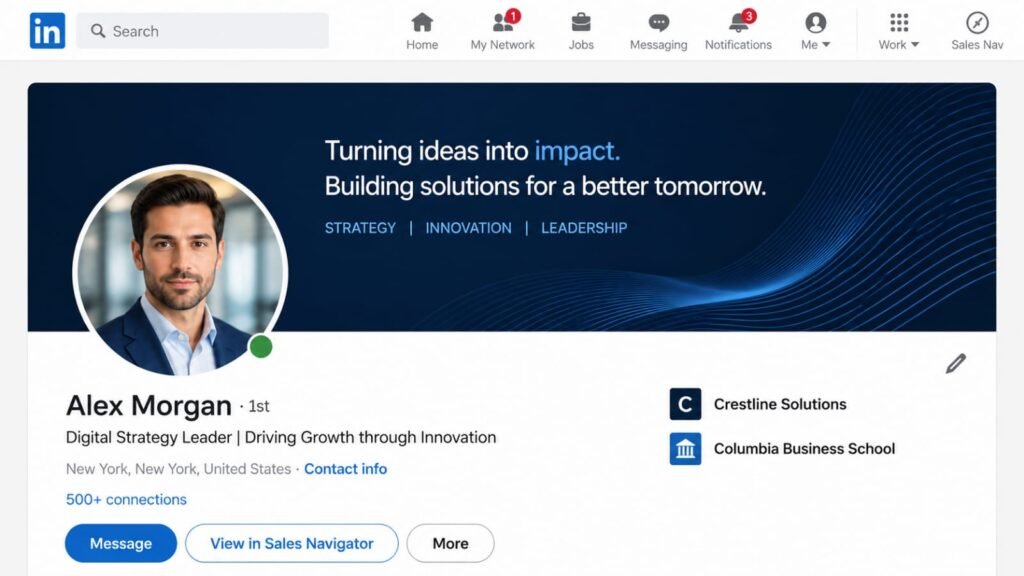
Your photo should look professional in any culture. Avoid overly casual clothing or anything culturally specific if you are targeting conservative corporate sectors like finance, law, or enterprise SaaS.
A clean banner with a simple message about your service adds instant credibility. This small detail plays a big role in Building a Personal Brand on LinkedIn that global clients immediately trust.
Crafting a Global Ready Headline
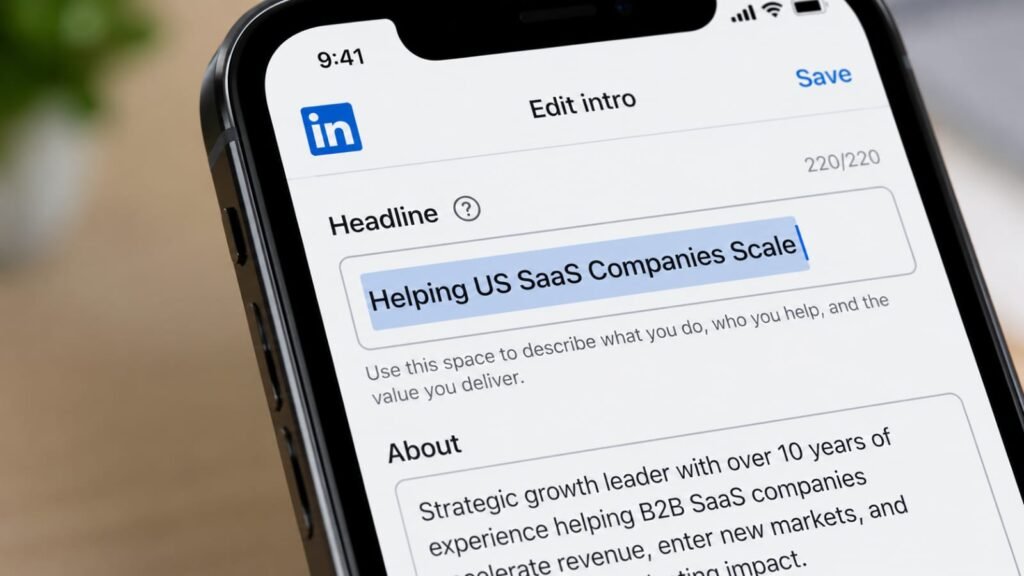
A global ready headline states the specific outcome you deliver and for whom, instead of a generic job title. “Helping US SaaS Companies Scale Their Backend Systems” tells a visitor exactly who you help within three seconds.
This single change is one of the fastest wins in Building a Personal Brand on LinkedIn, because it removes guesswork for a busy founder scrolling through dozens of profiles.
The “About” Section as a Global Elevator Pitch
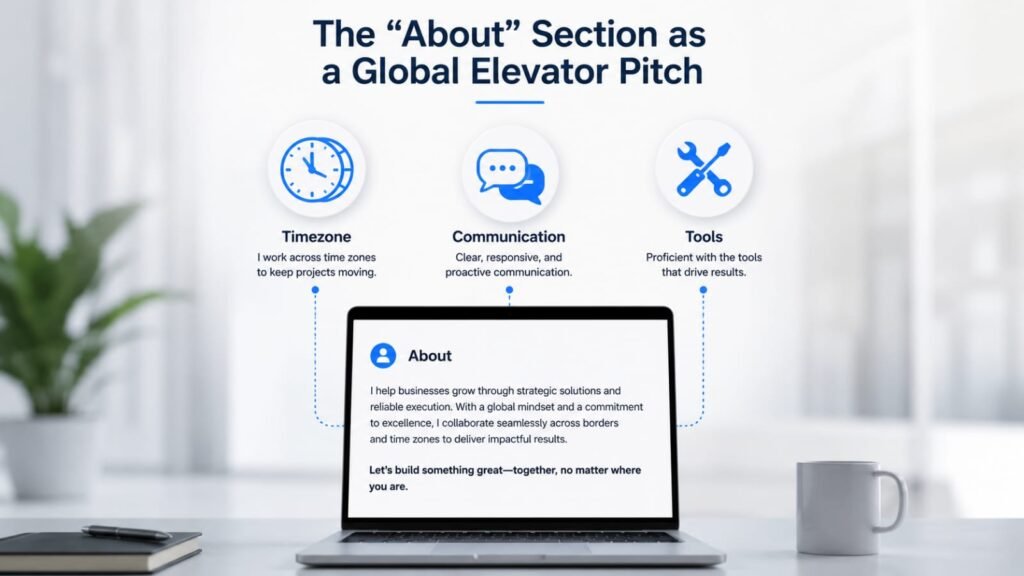
The About section should directly answer three questions every global client silently asks: what timezone do you work in, how well do you communicate in English, and what tools do you use. Keep sentences short and specific.
- Mention the hours you’re available to overlap with US/UK/EU time zones.
- State your communication tools clearly, like Zoom, Slack, or email.
- Use short sentences. This helps people learning English understand you easily.
Profile Audit Checklist: Banner, Headline, About

Use this quick checklist before publishing your profile. If you can’t check a box, that section still needs work before you start outreach.
- Banner: Neutral background, no clutter, one short line stating your service or niche.
- Banner: No culturally specific imagery, flags, or slang that could confuse an international viewer.
- Headline: Names a specific outcome, not just a job title (e.g., ‘Helping X clients achieve Y’).
- Headline: Mentions the industry or client type you specialize in.
- About: First line states who you help and what problem you solve.
- About: Includes timezone availability and preferred communication tools.
- About: Uses short sentences, no idioms, no jargon that a non native reader might miss.
- About: Ends with a simple, clear call to action, like ‘Message me to discuss your project.’
Step 2: Demonstrating Authority & Cultural Fluency

Cultural fluency is the ability to communicate and negotiate in a way that matches a client’s regional norms and expectations, so collaboration feels smooth instead of requiring extra explanation on either side.
Many global clients hesitate to hire foreign freelancers simply because of a trust gap. They worry about missed deadlines, communication issues, or quality differences. Building a Personal Brand on LinkedIn helps you close this gap directly, and understanding regional differences closes it even faster.
Communication norms are not identical across every market. The table below breaks down how to adjust your tone and negotiation approach depending on the client’s region.
| Region | Communication Style | Negotiation Tip |
| United States | Direct, fast paced, results first | State your rate confidently with a clear number, avoid over explaining |
| United Kingdom | Polite, understated, values professionalism | Frame pricing around reliability and quality, not just speed |
| Western Europe (EU) | Detail oriented, process focused | Provide a short rationale behind your pricing and timeline |
| Nordic Countries | Direct but low hierarchy, values equality | Keep tone collaborative rather than overly formal |
Showcasing International Experience
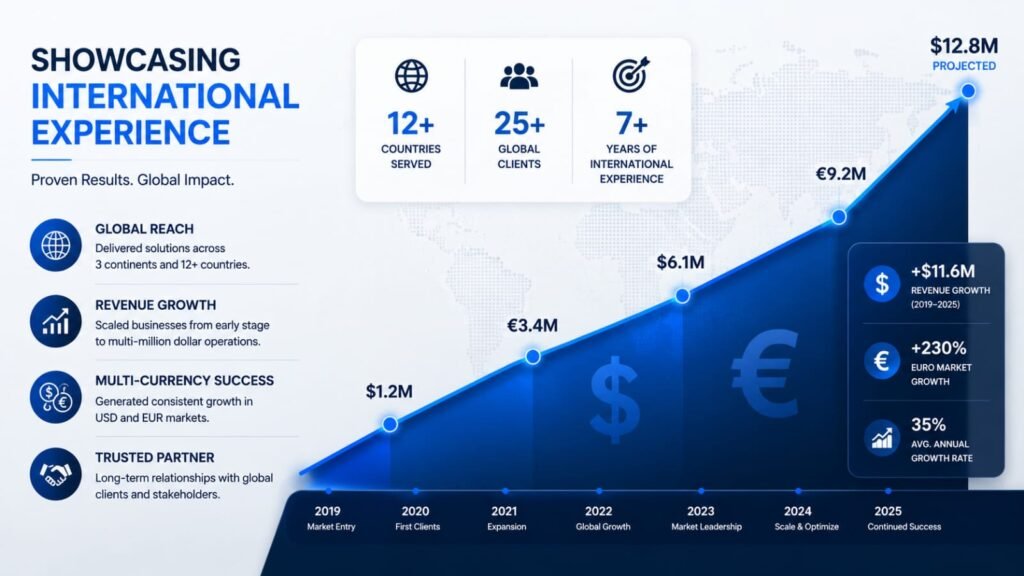
Even if all your past clients were local, you can reframe your work to sound globally relevant. Instead of “Worked with a local retail store,” say “Helped a retail business increase online sales by 30 percent using data driven strategy,” which reads as universal, results based experience anyone abroad can understand and respect.
Strategic Recommendations
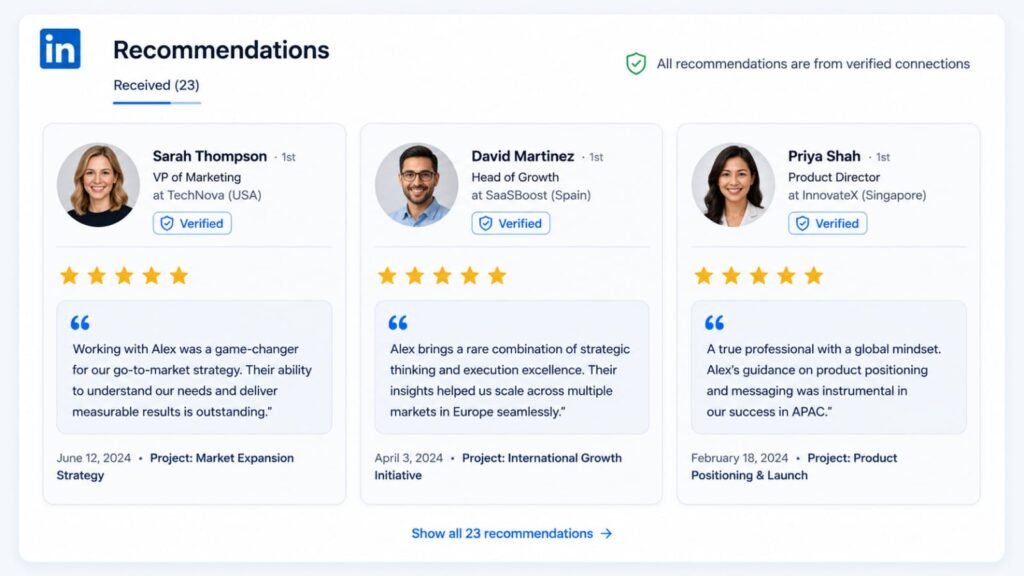
Ask for LinkedIn recommendations specifically from non local clients whenever possible. A short, genuine recommendation from someone in the US or UK builds instant credibility, and even a single well written one can outweigh five generic local ones in a global client’s eyes.
Addressing Language Capability
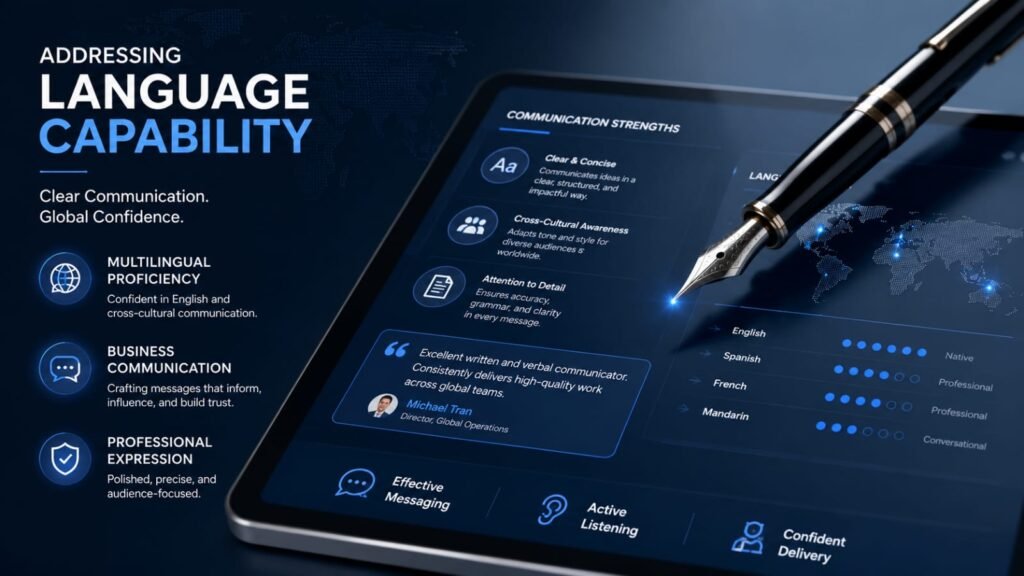
If English is not your first language, do not apologize for it anywhere on your profile. Simply demonstrate strong business writing through clear, well structured posts and messages. Confidence, not perfection, is what earns trust here, and grammar tools can quietly polish your writing before you post.
If you’d like structured guidance on building this kind of authority profile, our skill up with Dollar Tech courses program covers it in more depth.
Step 3: Content Strategy to Attract Global Inbound Leads
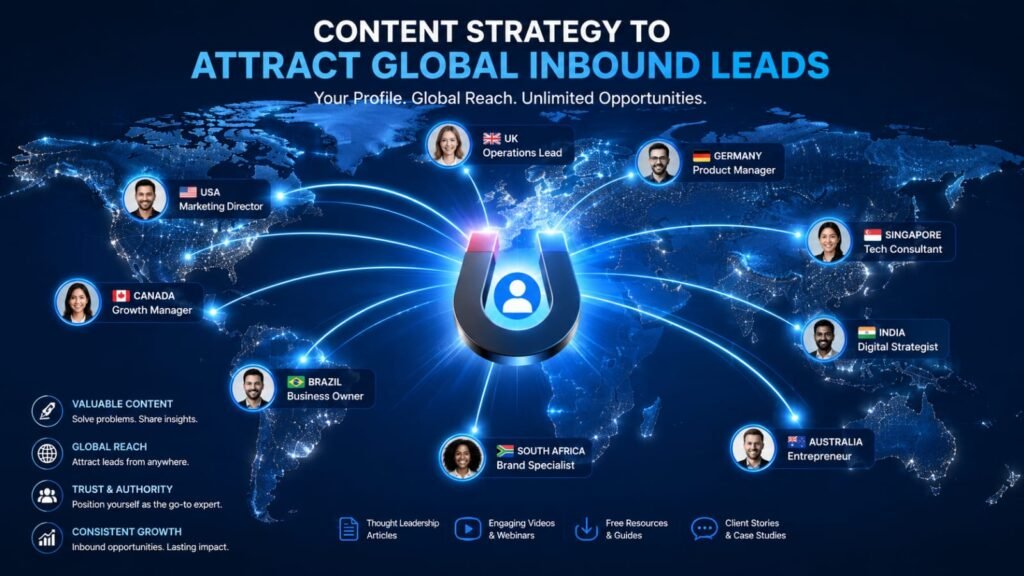
A global content strategy is a repeatable posting plan built around three pillars: proof of results, objection handling, and industry commentary, so international clients see evidence of your value before ever messaging you. This is where Building a Personal Brand on LinkedIn turns from theory into daily practice.
Consistent content is what turns your profile into a lead magnet. This is the growth engine behind Building a Personal Brand on LinkedIn that keeps international clients coming to you, day after day, without you chasing them.
“Show, Don’t Tell”: Case Studies
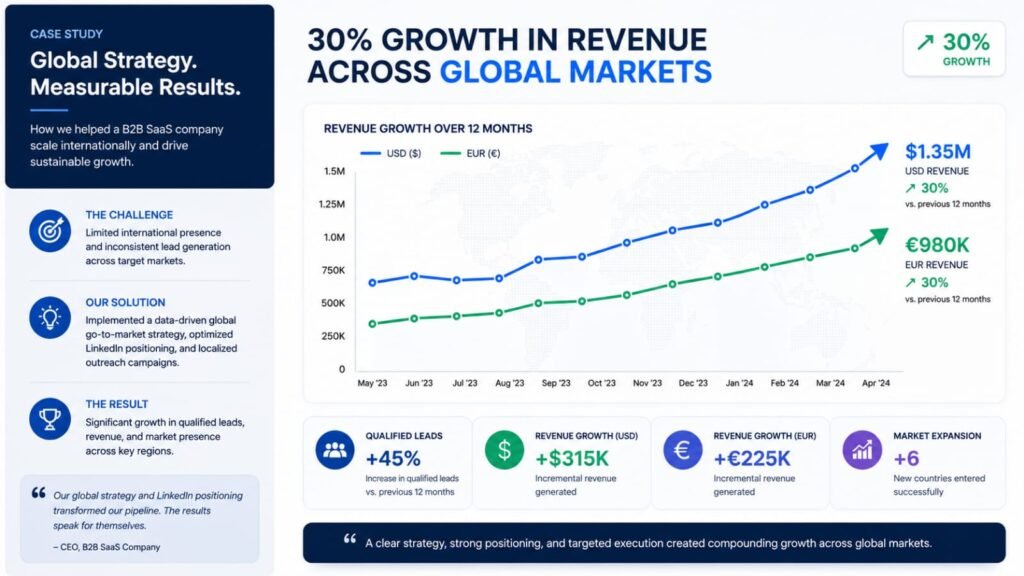
Instead of only describing your process, post real project results using USD or EUR figures. For example: “Increased monthly revenue by $12,000 for a US based e commerce client” is far more convincing than a vague description of skills.
Addressing Objections via Content
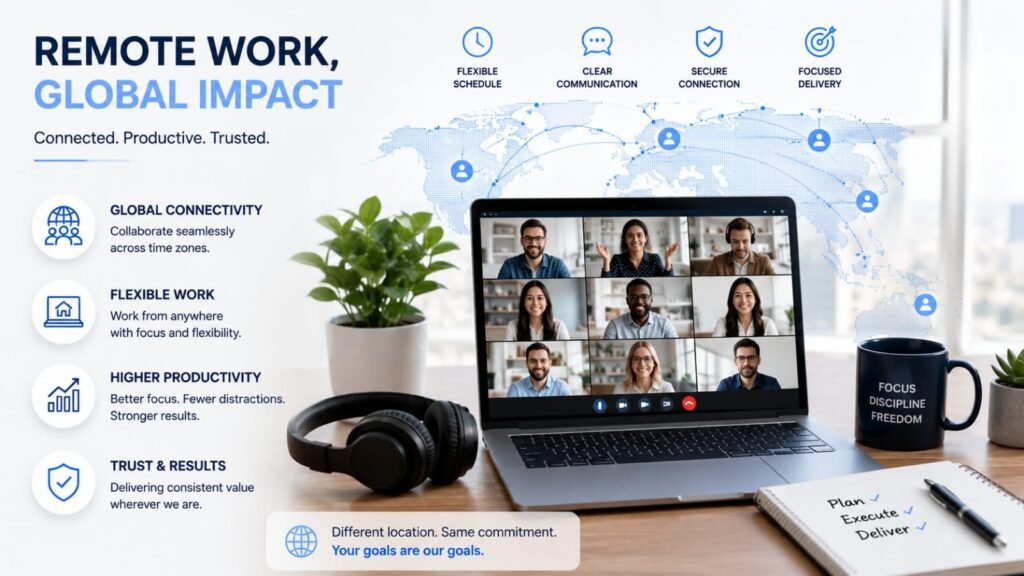
Write posts about your remote work setup, your reliable internet and tools, and exactly how you manage communication across different time zones. This quietly answers a client’s biggest fears before they even ask.
Thought Leadership

Comment thoughtfully on posts about industry trends relevant to the US and EU markets. This positions you as someone genuinely plugged into the global conversation, not just a distant service provider.
Step 4: Proactive Outbound Strategies to Land International Clients
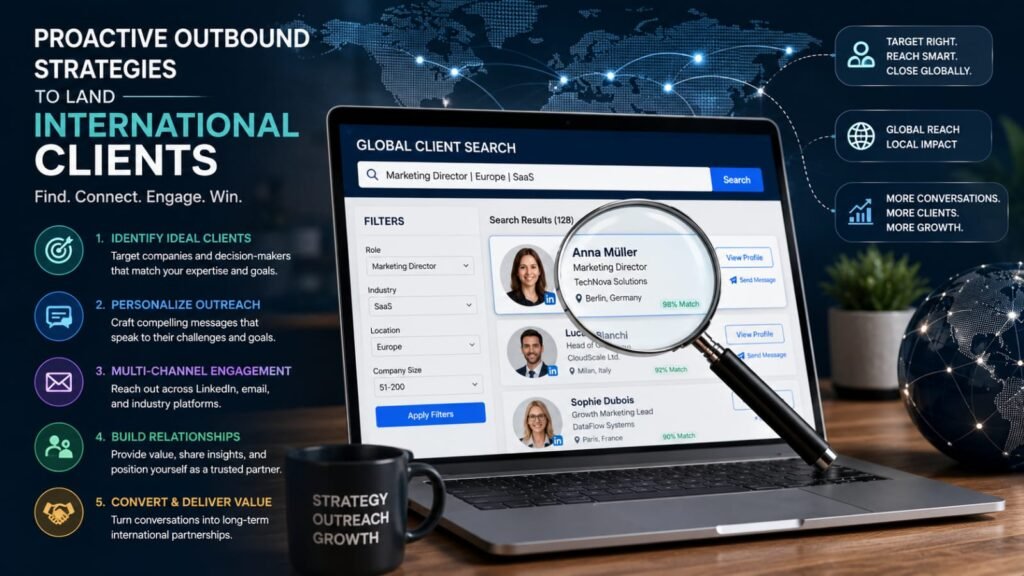
Outbound strategy on LinkedIn is the practice of getting noticed by decision makers before you message them, using specific, value adding comments and short, warm connection requests instead of generic cold pitches.
Most competitors completely skip this part. Posting content is powerful, but Building a Personal Brand on LinkedIn becomes far more effective when you also reach out proactively to the right people. This is the advanced layer that separates a visible profile from a fully booked calendar.
The “Smart Commenting” Technique: Templates & Examples
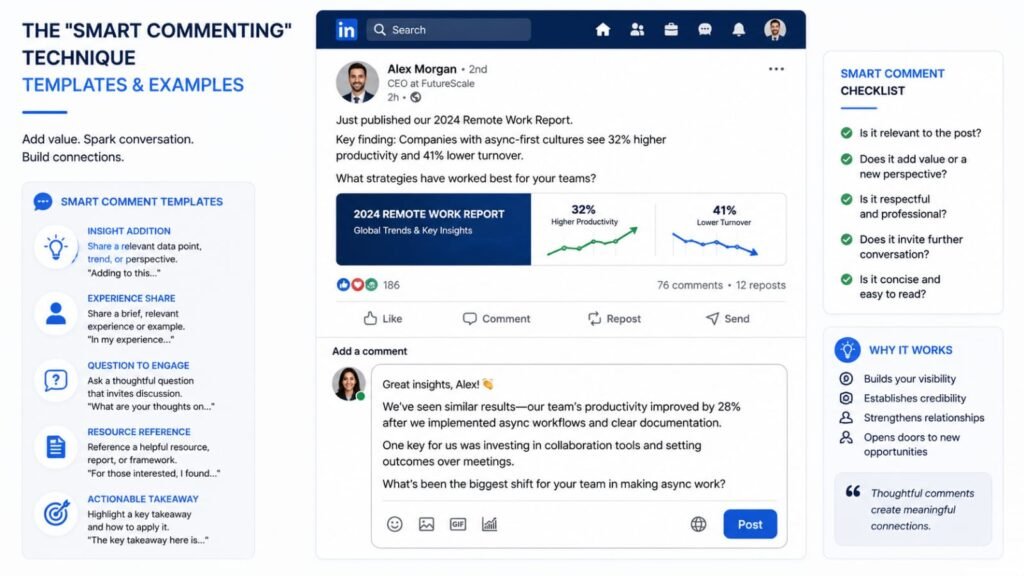
Find posts from CEOs or founders of your target companies abroad and leave genuinely valuable comments, not generic praise. A weak comment says “Great post!” A smart comment adds a specific insight, number, or related example, and follows one of these three structures.
- Agree + Add Data: “Completely agree. We saw the same pattern with a US client , after fixing X, their Y improved by [number]%.”
- Ask a Sharp Question: “Interesting take. Have you noticed [specific related challenge] affecting this too? Curious how you’re handling it.”
- Offer a Mini Insight: “This matches what we found working with [industry] clients: [specific tactic] often solves this faster than [common approach].”
Example in action: if a founder posts about slow customer onboarding, a smart comment might say: “We saw a similar drop off with a US client until we simplified the first two steps; onboarding time fell by 40 percent. Curious if you’ve tried something similar?” Share your expertise and reply to others. Do this for a few weeks. You will get noticed before you even send a message.
Personalized Global Outreach
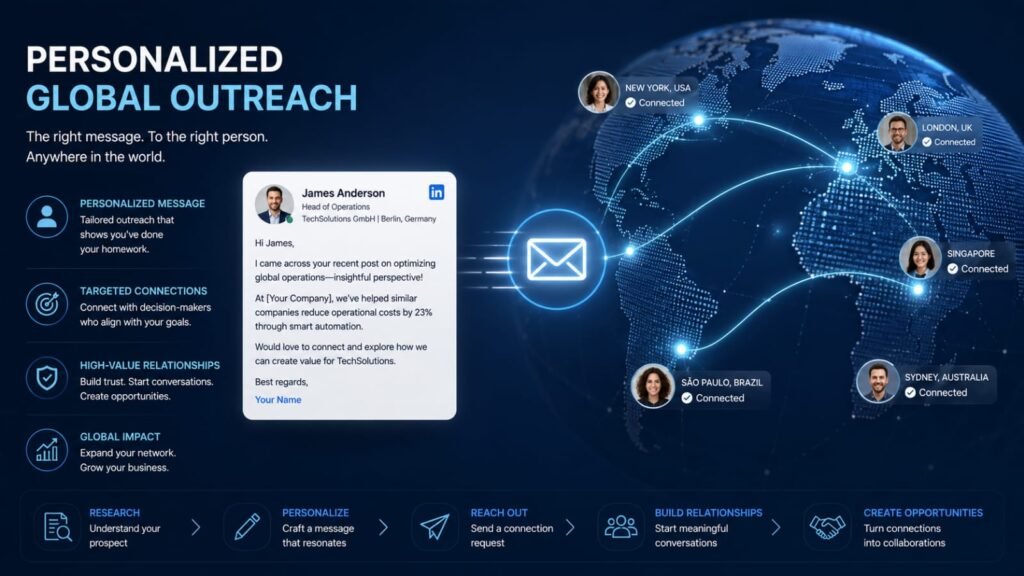
When sending connection requests, avoid sounding salesy. Try something like: “Hi [Name], I really liked your recent post on [topic]. I work with [industry] companies on [specific result] and would love to connect and share ideas.” This feels human, not like a pitch.
A slightly longer follow up template, once connected, can look like this: “Thanks for connecting, [Name]. I noticed [specific detail about their company or recent post]. I’ve helped similar [industry] businesses with [specific outcome] , happy to share a quick idea if useful, no pressure either way.” This keeps the tone value first and low pressure, which tends to get more replies from busy founders than a direct pitch.
For a complete library of outreach templates and smart commenting examples you can adapt immediately, explore our skill up with Dollar Tech courses program.
Step 5: Pricing and Negotiation in a Global Context
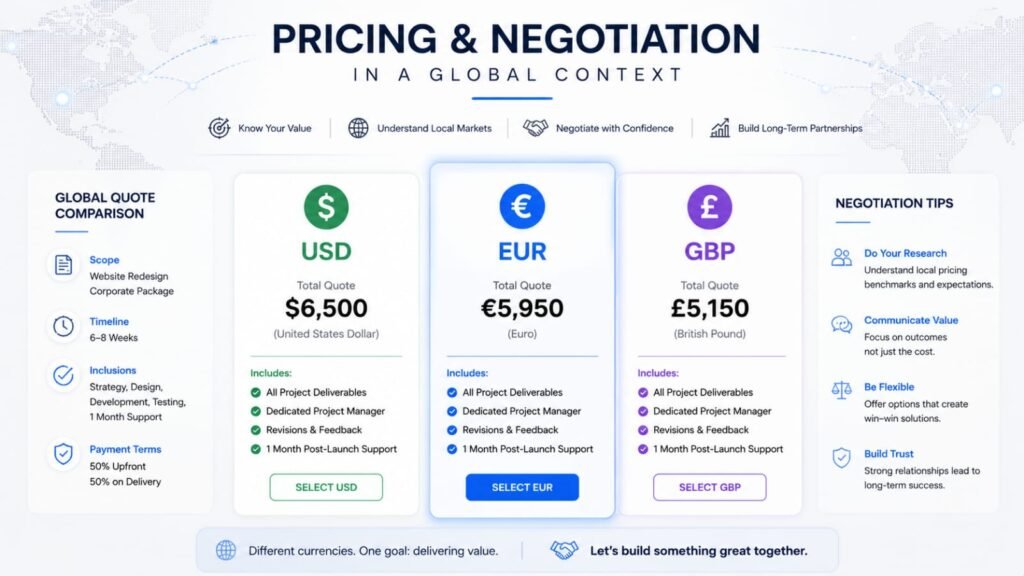
Global pricing is the practice of quoting your rate in a currency the client already trusts, such as USD, EUR, or GBP, paired with a negotiation tone adjusted to that client’s regional communication style.
Always quote your rates in USD, EUR, or GBP when working with international clients, since this removes confusion and signals that you understand the global market. Avoid quoting in your local currency, as it forces the client to do extra mental conversion and can make your pricing feel unfamiliar or harder to compare against other quotes they’ve received.
Handling International Payments
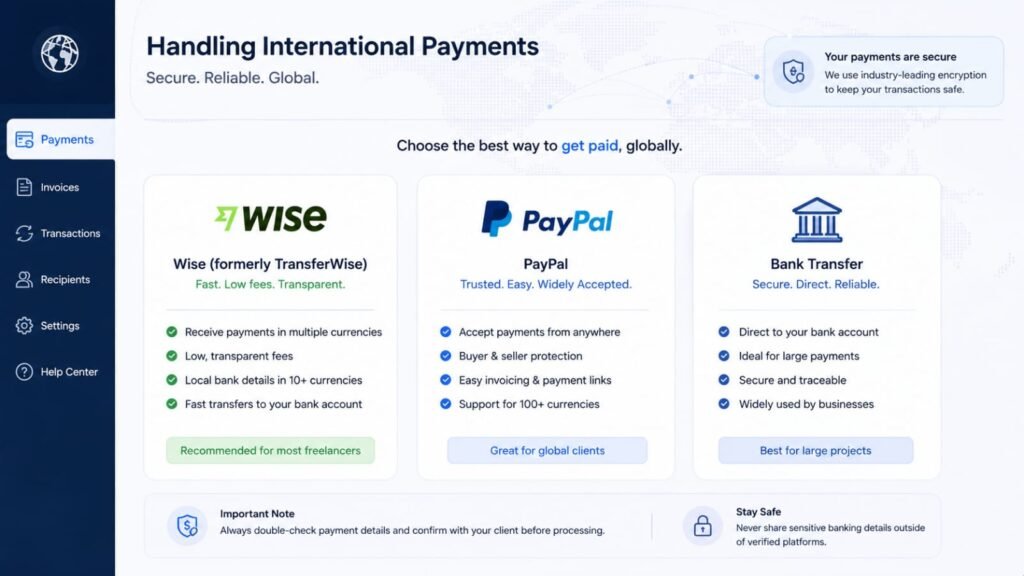
Pick the right payment method. It changes your fees and your payment speed. The table below compares the three most common options freelancers use with international clients.
| Method | Best For | Fee & Speed Notes |
| Wise | Regular smaller to mid invoices | Lowest fees, transparent mid market rate, 1 to 2 days |
| PayPal | Fast, familiar client payments | Higher fees, near instant, easy dispute process |
| Bank Transfer | Large one off invoices | Low or no fees on large sums, 3 to 5 days to clear |
Getting this right matters just as much as Building a Personal Brand on LinkedIn itself, since a great client relationship can still suffer over payment friction. Always confirm who covers transfer fees before the first invoice goes out, so there’s no awkward surprise on either side.
Cultural Nuances in Rate Negotiation
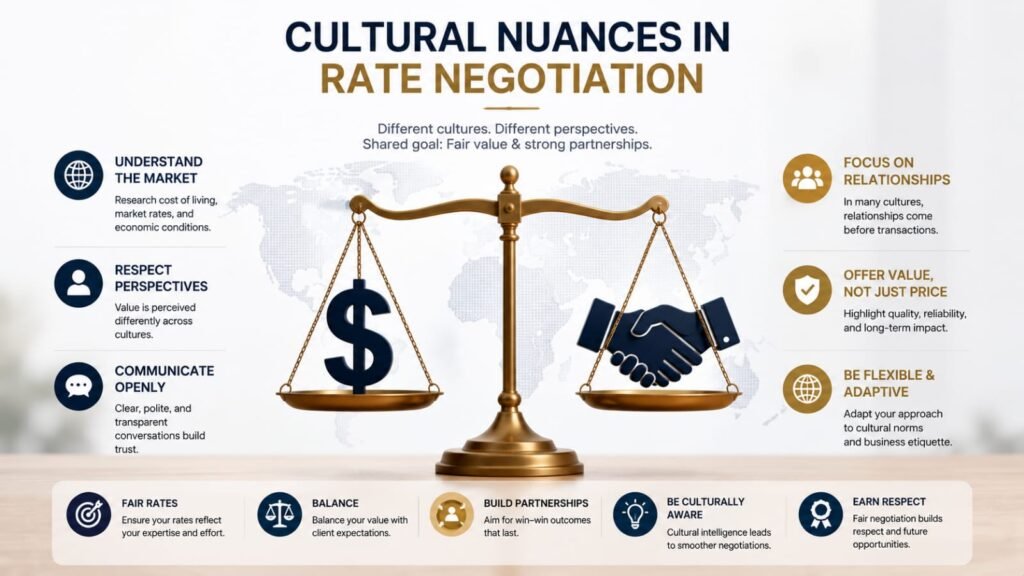
US clients often prefer direct, confident numbers stated upfront with minimal back and forth; hesitating or under explaining your price can read as a lack of confidence. European clients may ask more questions about your process before agreeing to a rate, which is normal and not a sign of low interest , it reflects a more detail oriented decision style.
A useful rule across all regions: state your rate once, clearly, then stop talking. Over justifying a price often signals doubt, while a calm, confident number signals experience, regardless of which country the client is in.
Conclusion: Consistency Is Key to Global Success
Real results from Building a Personal Brand on LinkedIn usually take three to six months of consistent effort. This is not an overnight process, but every optimized profile, post, and outreach message moves you closer to global clients.
Before you go, save this quick checklist and revisit it monthly as your global brand grows:
- Headline states a clear outcome for a specific type of client.
- About section covers timezone, English fluency, and tools used.
- At least two non-local recommendations are visible on your profile.
- One case study post published using USD/EUR figures this month.
- Five smart comments left on target CEOs’ posts this week.
- Rates quoted in USD, EUR, or GBP, with a clear payment method ready.
If your work also touches technical projects, understanding technical performance can help you serve global clients even better.
You can read our related article on Technical SEO & Growth Marketing to see how strong technical foundations support any growth focused service.
Start today. Update your headline, rewrite your About section, and post your first case study this week. Building a Personal Brand on LinkedIn is simply consistent, small actions compounding into global opportunities.
If you want a complete, structured roadmap instead of figuring this out alone, our skill up with Dollar Tech courses program gives you the exact step by step system to build your global brand faster.
Frequently Asked Questions
How do I start building a brand on LinkedIn?
Update your headline to focus on the value you provide. Fill out your “About” section with your skills and timezone availability. Finally, share one post this week about a project result.
Do I need perfect English to get international clients?
No. Clients value clear communication and results over perfect grammar. Use AI writing tools to check your posts, and focus on being professional and easy to understand.
How should I charge global clients?
Always quote your prices in USD, EUR, or GBP to avoid confusion. Discuss payment methods like Wise or PayPal early on to ensure both you and the client are comfortable.
How much time is needed to see results?
Building a brand is a long term process. Expect to see consistent results within three to six months of regular posting, commenting, and networking.
What should I post to attract foreign clients?
Post case studies that show real results in numbers. Share your thoughts on industry trends and explain how you handle remote work to build trust with new clients.